Why Arctic Permafrost Is Thawing — and How it Affects the Whole Planet
Feature Story
By Stephanie Miceli
Last update May 12, 2020
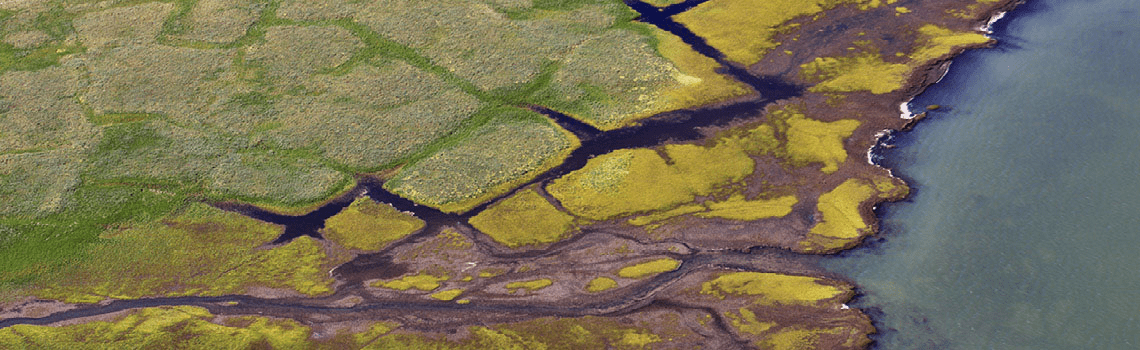
Only about 4 million people live in the Arctic, but despite its relatively small population, the region is hugely consequential.
The Arctic has strategic importance for national defense and the oil and gas industries. It’s also home to wildlife and sweeping landscapes, and to indigenous communities who have lived there for millennia.
Climate change poses challenges in all of these domains. At the recent annual meeting of the National Academy of Sciences, experts discussed the regional and global implications of a thawing Arctic during a virtual session.
Temperatures across the Arctic are rising two to four times faster than the global average, panelists stated. The consequences are already apparent — including sea level rise, loss of land ice from glaciers, and even wildfires. Furthermore, the thawing of permafrost — a frozen layer of soil that underlies the Arctic — could release vast amounts of methane and carbon dioxide. This not only poses a threat to buildings, roads, and pipelines in this region, but it can also accelerate coastline erosion.
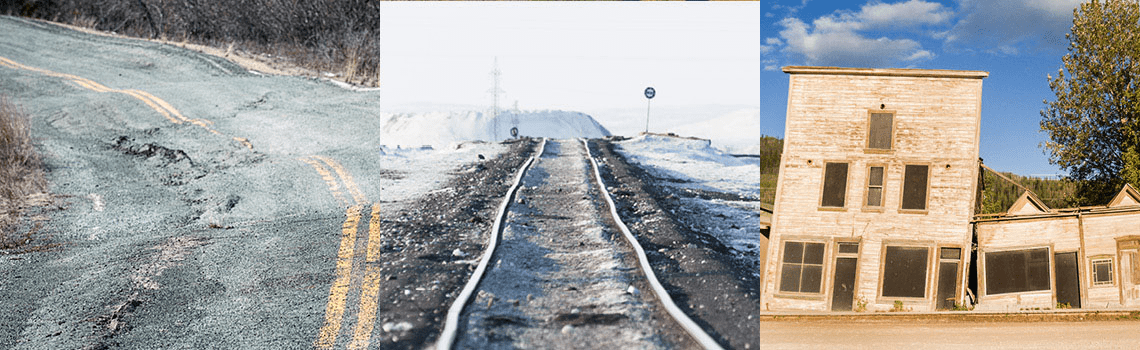
“Permafrost isn’t a problem of the future. It’s thawing now and has been for decades,” said John Holdren, Teresa & John Heinz Professor of Environmental Policy at Harvard University’s John F. Kennedy School of Government and former science adviser to President Obama.
The reason permafrost releases an enormous amount of carbon emissions is because it contains organic matter, including plant and animal remains, said Susan M. Natali, associate scientist and Arctic program director, Woods Hole Research Center
By current estimates, there may be as much as 2.5 times more carbon in permafrost soil than there is in the entire global atmosphere, Natali noted. However, the rate at which carbon is being emitted from Arctic permafrost is still uncertain. It depends on the rate of global temperature rise, which in turn depends on the rate of greenhouse gas emissions globally.
Carbon emissions from permafrost could also cut the world’s “carbon budget,” added Katey Walter Anthony, aquatic ecosystem ecologist and professor at the University of Alaska Fairbanks. The carbon budget refers to the amount of carbon dioxide emissions countries can emit before exceeding a 2 degree global temperature increase — the maximum set by the Paris climate agreement.
The world has three options for dealing with the fallout from Arctic permafrost thawing, said Natali. “The first option is mitigation — enhancing measures like emissions reduction. The second is adaptation and taking measures to reduce damage from impacts you can no longer avoid — like relocation. The third option is suffering.” To minimize suffering, we need to maximize mitigation and adaptation, she added.
“There’s a considerable amount of scientific and engineering talent figuring out how to design new structures and buildings that make them less vulnerable to permafrost thaw,” said Holdren. “And there are even attempts to refrigerate permafrost. It can succeed, but it’s very energy intensive.”
Ultimately, addressing the impacts of Arctic thawing will require political will and more global scientific collaboration, especially with Canada, Russian, Greenland, and Finland, panelists said. It will also be vital to keep indigenous communities at the center of the conversation, through forums like the Arctic Council.
Much remains to be discovered about the impacts of thawing permafrost in the Arctic, but it’s becoming increasingly clear that in the coming decades, the tundra landscape will look different than it does now.
“The rate of warming in the next eight years is very different than what we’ve seen over 8,000 years. The scientific community is modeling this, but there are lots of variables,” said Walter Anthony.
Watch the virtual session.
More like this


Discover
Events
Right Now & Next Up
Stay in the loop with can’t-miss sessions, live events, and activities happening over the next two days.
NAS Building Guided Tours Available!
Participate in a one-hour guided tour of the historic National Academy of Sciences building, highlighting its distinctive architecture, renowned artwork, and the intersection of art, science, and culture.